Speak to anyone who works in the built environment and they will likely agree that successful placemaking is impossible without good partnership. In the spirit of the times, we asked a few AI tools to define the term. Here's what they came back with:
- Placemaking is a collaborative, people-centred approach to planning, designing, and managing spaces.
- Placemaking goes beyond physical development to consider how the facilitation of spaces can foster community identity, public health, social connection, economic vitality, and a sense of belonging.
- Placemaking transforms mere "spaces" into "places" that encourage social interaction, cultural expression, and a strong sense of community.
Whether you view placemaking as a philosophy or a process, doing it successfully requires collaboration and community involvement.
This engagement often takes the form of meaningful partnership between private sector asset teams and third sector organisations embedded in the community. The aim of this document is to bring together learnings and recommendations from these types of partnerships that have shaped places collaboratively.
Learnings were gathered by Social Value Portal through a roundtable event bringing together professionals from across the placemaking ecosystem to share experience from live and recently completed projects. Participating organisations included London Square, Landsec, Shaftesbury Capital, Lovell Partnerships, Peabody, Circle Collective and Boyer Planning
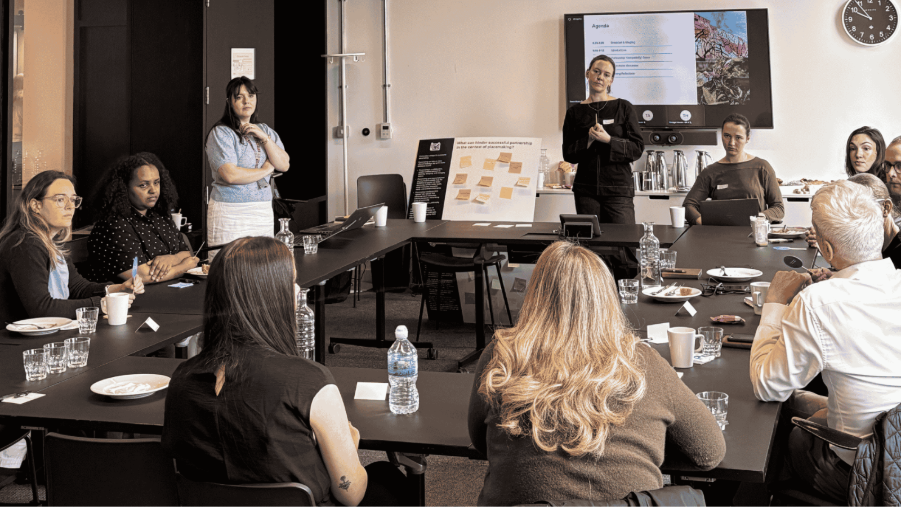
The Placemaking in Partnerships Roundtable
Challenges to successful partnership
In considering what successful partnerships looks like, it’s worth considering some common pitfalls of setting up and delivering them:
- Lack of a clear aim or shared purpose at the beginning
- Differing visions or goals for the place
- Lack of trust from the wider community
- Lack of community consultation or engagement
In the delivery of placemaking activities, the following challenges can lead to a breakdown in partnership:
- Working in silos without the opportunity to collaborate
- Misalignment of timelines, budgets and responsibilities
- Rigid policy or S106 commitments: targets can quickly become misaligned with community needs.
- Sudden changes in political agenda
- A single point of failure, meaning one person may hold the partnership together, and if they leave, the relationship falls apart
Identifying these challenges early helps us plan better at the outset of a new partnership and sustain successful outcomes for the long term.
Building trust
Partnerships cannot be sustained where there is no trust. Unfortunately, the built environment is grappling with a substantial trust deficit.
In 2019, a UK-wide survey by Grosvenor found that just 2% of respondents trusted developers to "act in an honest way in large-scale development," while only 7% trusted local councils. In 2025, Social Value Portal’s Real Estate Wellbeing Survey followed up with a survey of around 8,000 people across the UK. The results: 16% of respondents now express confidence in developers and planning authorities. A modest uptick, but confidence remains low, especially amongst older adults, lower-income, and rural respondents.
So, how can partnerships move the needle in a positive direction? The short answer is a long one: trust can't be built overnight.
"It takes time to build trust"
Angela Brown, Circle Collective
Sharing a common purpose is a good place to start. But it takes a sustained approach to demonstrating you are delivering on your promises, while also understanding the limitations of what can be delivered through the relationship.
To start, it helps to define clear roles and expectations and to plan for transparent reporting against progress. In the cycle of development, building partnerships as early as possible helps the community feel involved from the outset.
Just as places are always evolving and changing, so is partnership. The collaborative relationships we build are always a work in progress. But buildings and places tend to stay around for a while, so time is on our side to get these partnerships right.
A practical example of trust-building in action.
Circle Collective has partnered with Landsec for many years, with locations based within Landsec developments. Because Circle is trusted both by Landsec and by the wider community, stakeholders can correct misinformation in real time: for instance, reassuring Lewisham residents that the local shopping centre isn't closing when rumours circulate.
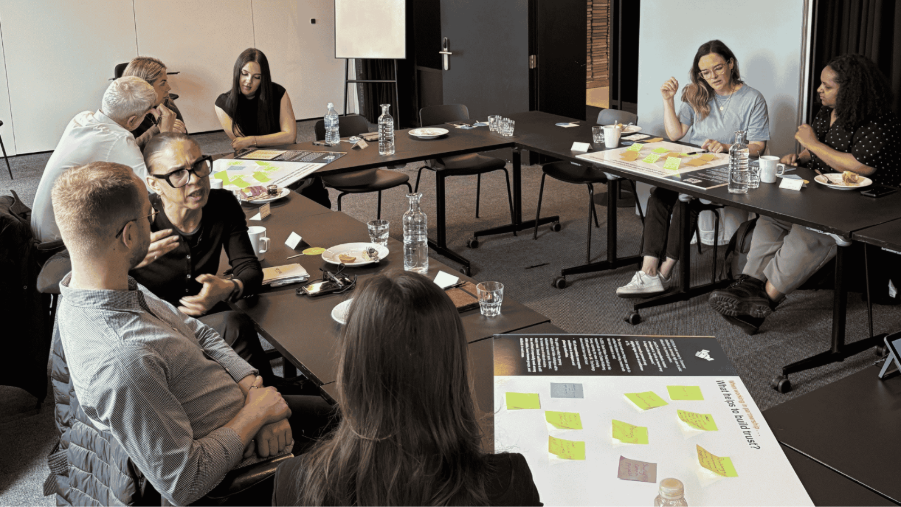
The Placemaking in Partnerships Roundtable discuss: How do we build trust?
Supporting systemic change
Given the long-term influence partnership can have on placemaking, we also have the opportunity to address systemic inequalities in society.
Looking at the Indices of Multiple Deprivation (IMD) in England, 82% of the most deprived neighbourhoods in 2025 were also among the most deprived in the 2019 iteration. As placemakers, we need to do more to move the dial against the systemic causes of persistent deprivation.
So, how can we address these issues through partnership? Here are four steps to deliver meaningful impact through placemaking in partnership:
- Make sure the right people are delivering change on the ground. This isn't just about injecting people into the community. Empowering communities through partnership is essential to addressing need effectively. Supporting people with lived experience on the ground helps make sure the right things are being prioritised and fosters a better relationship with the wider community.
- Great partnership happens in real physical spaces. A defined community space helps partnership happen. Spaces enable spontaneity, collective engagement and face-to-face collaboration.
- Resource for the long term. When funding dries up or stakeholders change, partnership falls apart. Sustainable programmes that deliver longer-term outcomes are more effective at addressing systemic issues. Consistency is key, as is the flexibility to respond to changing needs. This also points to the importance of designing handovers deliberately when the developer leaves.
- Let the outcomes happen organically. If the asset team has put the groundwork in place to build strong partnerships, placemaking will happen organically. The role of the private sector is to make sure the opportunities can happen, not to mandate the results.
"Placemaking is largely about things happening organically"
Cécile Bouchet, Peabody
Responsibilities matrix
We've developed the following responsibilities matrix for private and third sector organisations in the built environment to consider when working with one another.
|
Responsibility
|
Private Sector
|
Third Sector
|
Both
|
|
Frequent communication
|
|
|
X
|
|
Identify a common purpose
|
|
|
X
|
|
Set clear expectations and transparent methods to report progress
|
|
|
X
|
|
Co-design programmes and activities
|
|
|
X
|
|
Provide resource to sustain goals
|
X
|
|
|
|
Identify opportunities for partnership early on
|
X
|
|
|
|
Ensure the right people are delivering change on the ground
|
|
|
X
|
|
Use lived experience to empower the wider community
|
|
X
|
|
|
Provide physical space to support partnership
|
X
|
|
|
|
Understand local need
|
|
|
X
|
Recommendations for policy makers and the public sector
Partnerships don’t happen in a silo between private and third sector parties. Many other stakeholders play vital roles, and local authorities in particular are central to bringing organisations together, signposting resources, and holding stakeholders accountable through policy.
There were several key asks at the Roundtable for the public sector to enable meaningful partnership:
- Embed partnership in policy: Where partnership is written into planning requirements, it is far more likely to be resourced consistently and sustained over the long term. Policy should require it, while leaving enough flexibility for organisations to respond to changing need on the ground.
- Share the load, not just the oversight: Partnership works best when councils take an active delivery role alongside developers and community organisations – co-funding, co-designing, and helping shape outcomes – rather than reviewing them from a distance. As one participant put it: "When we have a large residential pipeline coming in, the council has an opportunity to come with us on that journey."
- Take a strategic role and see long-term visions through: Local authorities hold a view of need and opportunity that no single developer or charity can match. Sharing that picture early helps the private sector direct resource where it will have the most impact.
The roundtable surfaced a useful observation: residents don't typically distinguish between the council and the developer. Where reputation is shared, delivery responsibility benefits from being shared too.
Three takeaways
The case for partnership in placemaking is clear. The harder question is: why partnership so often fails to deliver on its promise, and what would have to change for that to shift?
Three things stand out.
- Trust is not a soft outcome to be measured at the end, but the operating condition under which everything else either works or doesn't.
- The responsibilities matrix only works if all three parties – private, third, and public sector – show up to it.
- Successful partnerships in this sector tend to be the ones that resist the temptation to over-engineer outcomes. Set the conditions, resource the long term, get the right people on the ground, and the place will often make itself.
Need Social Value support?
Social Value Portal works with developers, asset teams, and local authorities to measure and maximise the impact of placemaking partnerships. Learn more here.

.svg)